How Do I Know If My Puppy Is in Heat?
The clearest signs are a swollen vulva, a bloody or pink discharge, and a puppy who suddenly wants to pee far more often than usual. Most female puppies have their first heat at around six months, according to VCA Animal Hospitals, though small breeds can start earlier and large breeds can take up to two years.
Some puppies give you every sign at once. Others are so tidy that you only notice when a neighbor’s male dog starts camping outside your gate. Knowing what to look for helps you keep her comfortable and, just as important, avoid a surprise litter.
The first signs owners usually notice
Vulvar swelling is the earliest change, but it’s easy to miss on a fluffy puppy. Most owners spot the discharge first. It often shows up as small red spots on bedding, the couch or your kitchen floor, and it can start a few days after the swelling begins.
Here’s what to watch for during the first heat:
- A swollen, softer-looking vulva
- Red or blood-tinged discharge that later turns watery and pink or straw-colored
- Licking her rear end more than usual
- Peeing more often, sometimes in small marks on walks or even indoors
- Sudden interest from male dogs, and sometimes interest in them in return
- Clingy, restless or slightly grumpy moods
- A dip in appetite for a few days
That extra licking can be confusing because dogs lick their rear for lots of reasons. If you’ve already read about why dogs lick their anus, you’ll know most causes are dull ones. When it comes with swelling and spotting in an unspayed female, heat is the likely answer.
How old puppies are at their first heat
Size matters most. Small dogs mature faster, so a Chihuahua or Yorkie may cycle well before her first birthday, while a Great Dane might not show signs until she’s nearly two.
| Dog size | Typical first heat (AKC guide) | How often heats tend to come |
|---|---|---|
| — | — | — |
| Small breeds | By 6 to 7 months | Up to three times a year |
| Medium breeds | 7 to 9 months | About twice a year |
| Large breeds | 12 to 16 months | About twice a year |
| Giant breeds | Can be 18 months to 2 years | About once a year |
The first column comes from the AKC’s guide to dogs in heat, and the frequency column from VCA. Both stress that individual dogs vary. A few start as young as four months.
Young dogs are also irregular at first. VCA notes that newly cycling females can take up to two years to settle into a steady rhythm, so don’t panic if her second heat arrives earlier or later than you expected.
What each stage of the cycle looks like
A heat cycle isn’t one event. It’s a series of hormonal stages, and the signs change as she moves through them.
Proestrus
This is the bloody part. Estrogen rises, the vulva swells and discharge appears. Male dogs get interested, but she’ll usually turn them down, sometimes with a snap. The AKC puts proestrus at 3 to 21 days, with 9 days as the average.
Estrus
Now she’s fertile and may welcome a male. The discharge lightens to pink or yellowish, and she might “flag,” which means moving her tail to one side when touched near the rump. Her recall often gets worse right now, so leash walks only. Estrus also runs about 9 days on average.
Diestrus and anestrus
Swelling goes down and the discharge stops. Progesterone stays high for around two months whether or not she’s pregnant, which is why some dogs show false pregnancy behaviors like nesting. After that comes anestrus, a quiet resting phase that lasts several months before the next cycle.
Silent heats and other confusing cases
Some puppies have a “silent” first heat with very little swelling or bleeding. Others are such fastidious groomers that they lick away every drop. You might not know she cycled at all until a male shows up very interested.
A few dogs also have a split heat, where the signs start, fade and then return a couple of weeks later. It’s more common in young females and usually settles down with time. Ask your vet if it keeps happening.
Breed-specific timing can help. Owners of Goldens, for example, can check our guide to how long Golden Retrievers are in heat for what’s typical in that breed.
Heat or something else?
Spotting blood near a puppy’s rear isn’t always heat. Urinary tract infections, a condition called puppy vaginitis, and injuries can all cause discharge or licking. Here’s a quick way to compare.
| What you see | More like heat | More like a problem |
|---|---|---|
| — | — | — |
| Discharge | Red, then pink or straw colored, no strong smell | Thick, yellow or green, or foul smelling |
| Peeing | More often, small marks, otherwise normal | Straining, crying, or only dribbles |
| Energy | A bit clingy or restless | Lethargic, hiding, or off food for more than a day or two |
| Vulva | Clearly swollen | Normal size with redness or crusting |
| Age | Usually over 5 or 6 months | Any age, including young puppies |
If she’s straining to pee, see our article on what to do when your dog can’t pee, and call your vet the same day.
How to care for a puppy in heat
Heat itself isn’t an illness, so most puppies need comfort and supervision more than treatment. A few practical habits make the two or three weeks much easier.
- Use a washable or disposable dog diaper indoors. Our guide on how to put on a dog diaper covers fit and tail holes.
- Cover her favorite couch spot and bed with old towels you can wash.
- Walk her on a leash every time, even in places where she’s usually reliable off lead.
- Skip dog parks, daycare and group classes until the cycle is fully over.
- Never leave her alone in the yard, even for a minute.
- Keep a calendar or phone note of the start date so you can predict the next one.
A determined male can jump or dig under a fence surprisingly fast. If your yard has weak points, read up on stopping dogs from escaping the yard before her next cycle, because the same fixes keep visitors out too.
Remember that a diaper won’t prevent mating. Only separation does that.
Common mistakes during a first heat
These come up again and again with first-time owners:
- Assuming a young puppy can’t get pregnant. She can, during her very first heat.
- Thinking the danger is over once the bleeding stops. She’s often most fertile after the discharge turns pale.
- Trusting a fence or a closed door alone. Supervise every outdoor trip.
- Letting her greet intact males “just for a second” on walks.
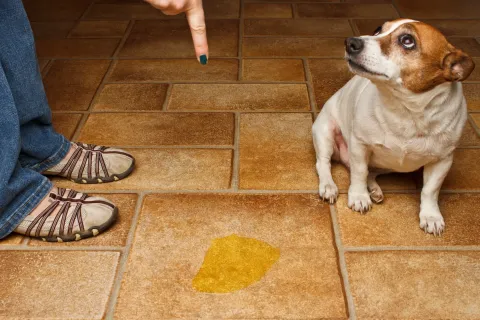
- Scolding her for peeing indoors. The hormones are driving it, so clean up with an enzyme cleaner and take her out more often.
- Ignoring a smelly discharge or a sick, thirsty dog in the weeks after heat.
If she does mate, call your vet promptly. The AKC notes that pregnancy-preventing injections only work if they’re given within a few days.
Spaying and timing
VCA recommends spaying before the first heat for most dogs, which typically means before 6 or 7 months. It also notes that some large breeds, such as Labrador Retrievers, Golden Retrievers and German Shepherds, may benefit from waiting until after the first cycle. That’s a conversation to have with your vet, and it fits nicely into the list of questions to ask your vet about a new puppy.
Most vets prefer to wait until a dog is out of heat before spaying, because the blood vessels around the uterus are larger during a cycle.
When to call the vet
Call your vet if you notice any of these:
- Bleeding that lasts longer than about three weeks
- A puppy under four months old with vaginal bleeding
- Thick, smelly, yellow or green discharge
- Vomiting, drinking a lot, peeing a lot, or lethargy in the weeks after a heat
- Straining to pee or blood in the urine
- An unplanned mating
The AKC warns that a womb infection called pyometra can develop in the weeks after a heat. It’s most common in intact dogs over six, but any intact female can get it, and it’s an emergency.
FAQ
How long does a puppy’s first heat last?
Most heats run about two to three weeks from the first swelling to the end of estrus. VCA puts the receptive phase alone at around 9 days on average, with a range of 2 to 24 days.
Can a puppy get pregnant on her first heat?
Yes. Many breeders wait until a later cycle because first heats are less reliable, but a young female can still conceive. Keep intact males away. If you’re wondering how he’ll react, our guide on whether male dogs go through heat explains what happens with intact males.
Do puppies act differently when they’re in heat?
Many do. Clinginess, restlessness, mounting, whining and a smaller appetite are all common. Some females become short-tempered with other dogs during proestrus. It’s also one reason you might see female dogs humping toys or pillows.
How much does a puppy bleed in heat?
It varies. Small dogs and good self-groomers might leave only a few spots, while larger dogs can drip noticeably for the first week. Heavy bleeding with weakness or pale gums needs a vet.
Is a dog in heat in pain?
Heat doesn’t usually hurt, though some females seem uncomfortable or moody. Don’t give human painkillers. Many are toxic to dogs, so ask your vet if she seems sore.
Should I bathe my puppy while she’s in heat?
A gentle bath is fine and can help with smell and staining. Use a dog shampoo and keep it short. If she’s still very young, our tips on bathing a puppy for the first time apply.
This article is for general information and isn’t a substitute for advice from your vet. Last reviewed November 2026.