Can Dogs Eat the Mushrooms That Grow in Your Yard?
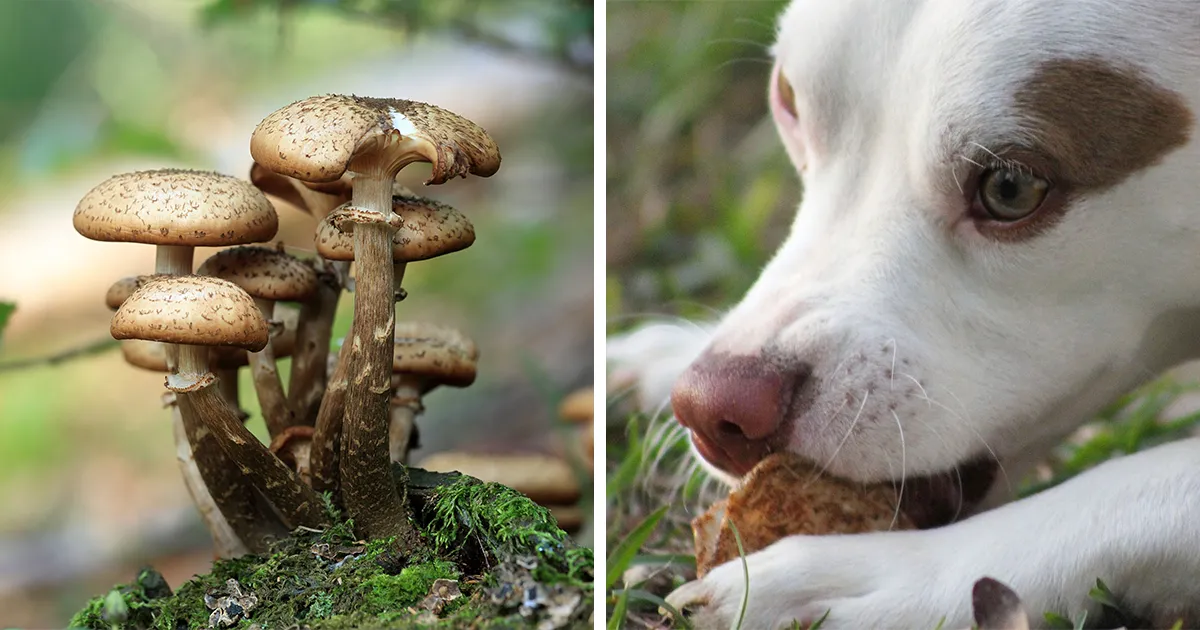
After a wet week, the lawn can sprout mushrooms overnight. Most dogs ignore them. Some, especially puppies and dogs who eat anything at ground level, will grab one before you’ve even spotted it.
The short answer is no, dogs shouldn’t eat any wild mushroom from your yard. Many lawn mushrooms are harmless, but a few are deadly, and even experts struggle to tell them apart without a close look. Vets treat any unknown mushroom a dog has eaten as potentially toxic until proven otherwise.
Why mushrooms pop up in yards
Mushrooms are the fruiting bodies of fungi that live in the soil all year. They appear when conditions are right, usually after rain, in shady spots with plenty of buried organic matter. Old tree roots, rotting stumps, wood chips, mulch and thick thatch are all favorite spots.
So mushrooms don’t mean your lawn is unhealthy. They do mean that whatever’s feeding them underground is still there, and that more will appear the next time it rains.
Which yard mushrooms are dangerous to dogs
Toxic mushrooms are grouped by the effect they have. This table covers the main groups vets see.
| Type of toxin | Examples | Typical signs in dogs | How fast signs start |
|---|---|---|---|
| — | — | — | — |
| Liver toxins (amanitins) | Death cap (Amanita phalloides), destroying angels, some Galerina and Lepiota species | Vomiting and diarrhea, an apparent recovery, then liver failure | Often 6 to 12 hours, sometimes longer |
| Nerve toxins (isoxazoles) | Fly agaric and panther cap (Amanita muscaria and A. pantherina) | Wobbliness, disorientation, agitation or deep sleepiness, tremors | Usually within a few hours |
| Muscarinic toxins | Some Inocybe and Clitocybe species | Drooling, watery eyes, diarrhea, slow heart rate | Often within an hour or two |
| Hallucinogens (psilocybin) | “Magic” mushrooms such as Psilocybe species | Wobbly walking, odd behavior, vocalizing, overheating | Often within an hour |
| Stomach irritants | Many common lawn mushrooms | Vomiting and diarrhea, sometimes severe | Usually within a few hours |
The group to fear most is the liver toxins. The Merck Veterinary Manual describes a pattern where vomiting and diarrhea start some hours after eating, then the dog seems to recover, and then liver failure develops. That false recovery is why waiting to see what happens is so risky. Merck notes that puppies, or dogs who eat a lot, can die within 24 hours.
If your dog ate something that has made them wobbly or strange rather than sick, our guide on what to do if your dog seems high covers that side of things.
Why you can’t tell safe from toxic by looking
Deadly Amanita species can look like a plain white or pale green mushroom, not much different from the ones in a supermarket. Color, smell and whether animals have nibbled it tell you nothing reliable. Many dogs are drawn to mushrooms that smell fishy or earthy, and some toxic species have exactly that smell.
What to do if your dog eats a yard mushroom
Act straight away, even if your dog seems completely fine.
- Take any remaining mushroom away from your dog and stop them eating more.
- Call your vet or an emergency clinic now. In the US, you can also call the ASPCA Animal Poison Control Center on (888) 426-4435 (a consultation fee may apply).
- Collect a sample. Pick a whole mushroom from the same patch, including the base, wrap it in a damp paper towel and put it in a paper bag. Don’t use plastic, which makes mushrooms turn to mush. Photos of the cap, gills and stem help too.
- Don’t make your dog vomit unless a vet tells you to. Home remedies can cause harm and waste time.
- Note the time your dog ate the mushroom and roughly how much.
- If your dog vomits, save a sample of that too. It sounds unpleasant, but it can help identify what was eaten. Our guide to cleaning up dog vomit covers the cleanup afterwards.
Vets may make your dog vomit, give activated charcoal, run blood tests and keep your dog in for fluids and liver monitoring. There’s no simple antidote for most mushroom poisonings, so early treatment matters a great deal. A mycologist can sometimes identify the sample, and your vet or poison line can often arrange this.
When to call the vet
Any time your dog has eaten a wild mushroom. Don’t wait for symptoms. Go straight to an emergency vet if you see vomiting, diarrhea, drooling, wobbliness, tremors, seizures, unusual sleepiness, yellow gums or eyes, or collapse.
How to keep your dog safe from yard mushrooms
- Walk the yard after rain, especially in late summer and autumn, and pick any mushrooms before letting your dog out. Wear gloves, bag them and put them in the trash, not the compost.
- Rake up fallen leaves, clear old wood chips near play areas and remove rotting stumps if you can.
- Improve drainage and cut back overhanging branches so the lawn dries out faster.
- Supervise puppies and grazers. A dog who eats stones, sticks or mulch is more likely to eat mushrooms too. Our guides to puppies eating stones and why dogs chew rocks explain how to manage scavenging.
- Teach a solid “leave it” and a “drop it”. These two cues save more dogs from swallowing hazards than any fence.
- On walks in parks and woods, keep scavengers on a lead or a long line in mushroom season. Our guide to long lead training shows how to give freedom safely.
Fungicides rarely stop mushrooms for long, because the fungus lives deep in the soil. They also add another chemical your dog can walk through, so most vets and gardeners prefer simply removing mushrooms by hand. Autumn yards can hold other hazards too, and our guide to water chestnuts and horse chestnuts explains which kind is toxic.
Common mistakes
- Waiting for symptoms. With the most dangerous mushrooms, a dog can look well for many hours while the liver is being damaged.
- Assuming the mushroom is safe because it looks like a shop-bought one.
- Throwing the mushroom away before the vet has seen a sample or photo.
- Making a dog sick with salt or hydrogen peroxide without vet advice.
- Thinking one dog was fine so the next one will be. The patch can contain more than one species.
Are store-bought mushrooms safe for dogs?
Plain, cooked mushrooms from the grocery store, such as white button mushrooms, aren’t considered toxic to dogs. Keep them plain, though. Garlic and onion, which often go into mushroom dishes, are toxic to dogs, and butter or heavy sauces can upset the stomach. A small piece of plain cooked mushroom is fine as an occasional treat, but dogs gain nothing from it that their food doesn’t already give them.
Frequently asked questions
Are all yard mushrooms poisonous to dogs?
No. Most lawn mushrooms are either harmless or cause only stomach upset. The trouble is that you can’t safely tell which is which at home, so every wild mushroom should be treated as dangerous.
How long after eating a mushroom will a dog get sick?
It depends on the type. Some cause vomiting or wobbliness within an hour or so. The liver-damaging kinds often take 6 to 12 hours or longer to cause signs, and liver failure can follow a day or more after that.
Can a dog die from eating one mushroom?
Yes, with the deadliest species, a single mushroom can be enough to seriously harm a small dog. That’s why vets want to see dogs straight away rather than wait.
Will cutting the grass get rid of mushrooms?
Mowing removes the visible mushrooms for a while but spreads spores and doesn’t touch the fungus underground. Picking them by hand and drying out shady, damp areas works better.
Is it a problem if my dog only sniffed a mushroom?
Sniffing alone isn’t a concern. If you’re unsure whether any was eaten, check your dog’s mouth and call your vet for advice, mentioning that you couldn’t rule it out.
What other garden dangers should I watch for?
Grass seeds, insect stings and spiders are common seasonal risks. Our guides to grass seeds in dogs, bee stings and brown recluse bites cover each one.
This article is for general information and isn’t a substitute for advice from your vet. Last reviewed November 2026.