Dog Has Diarrhea With Blood but Acts Fine: Common Causes
A few streaks of bright red blood in otherwise normal poop, from a dog who’s eating, playing and acting like their usual self, most often points to irritation low in the gut. Mild colitis, a scrape from something they ate, stress, parasites and anal gland trouble are the usual suspects. It still deserves a call to your vet, because you can’t tell the cause from looking at the stool, and a few serious conditions start quietly.
The good news is that a bright, energetic dog with a small amount of red blood is rarely an emergency. The guide below shows how to read what you’re seeing, what usually causes it and which signs mean you shouldn’t wait.
Red blood versus black stool
Vets sort blood in poop into two broad types, and the color tells you roughly where it’s coming from.
- Bright red blood, called hematochezia, usually comes from the lower intestine, colon or rectum. It hasn’t been digested, so it keeps its red color. This is the type most often seen in dogs that are still acting normal.
- Black, tarry stool, called melena, means blood has been digested on its way down from the stomach or small intestine. According to the American Kennel Club’s guide to blood in dog stool, it can point to ulcers, foreign objects, liver or kidney disease, or a reaction to anti-inflammatory drugs.
Black poop is the more worrying of the two, even in a dog who seems fine. One quick check helps, since dark foods like liver or venison can darken normal stool. Smear a little on a white paper towel. Real melena tends to leave a dark red or black mark.
Common causes when your dog seems fine
Most of these causes affect the large bowel, which is why the dog’s energy and appetite often stay normal at first.
Dietary indiscretion
Dogs eat things they shouldn’t. Garbage, spoiled food, sticks, bones and rich table scraps can all irritate the colon or scratch the lining on the way out. A sudden switch of food can do it too. If your dog raided the trash yesterday and today there’s a little red blood in a soft stool, this is a likely link. Sharp items like bone shards are worth mentioning to your vet, because they can cause more damage than you’d guess.
Stress colitis
Boarding, a house move, a new pet, fireworks or a long car trip can all trigger inflammation of the large bowel. The classic picture is frequent small stools, sometimes with mucus and fresh blood, and straining at the end. Many dogs bounce around as usual between trips outside. If you see a slimy coating as well, our article on mucus diarrhea in dogs covers that side of it.
Intestinal parasites
Hookworms, whipworms and protozoa like Giardia and coccidia can all cause bloody or loose stool. Hookworms in particular feed on blood. A dog can carry a moderate worm burden and still seem perfectly happy, which is why a fecal test is one of the first things a vet runs. It’s also a good moment to check that you’re keeping up with a regular worming schedule.
Anal gland problems
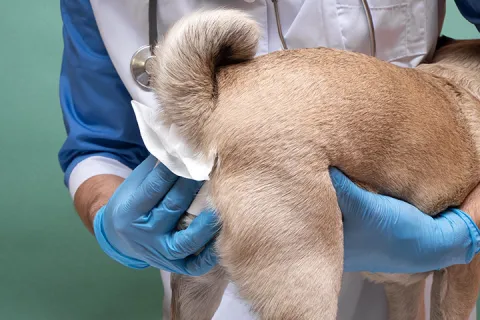
An impacted or infected anal sac can bleed, and the blood ends up on the outside of the stool rather than mixed through it. Scooting, licking under the tail and a fishy smell are the giveaways. You can read more about how anal glands are expressed and why some dogs need help with them.
Straining from constipation
Hard, dry stool can cause a small tear near the anus. You’ll usually see a streak of blood on the surface of a firm poop, and your dog may strain a bit. It often settles once the stool softens.
Less common but serious causes
Parvovirus, acute hemorrhagic diarrhea syndrome, clotting problems from rat poison, polyps and tumors can all cause bloody stool. These usually come with other signs fairly quickly, but early on a dog can look surprisingly normal. That’s the main reason vets don’t want owners to assume it’s nothing.
Quick reference by what you see
| What you see | Likely source | Possible causes | How soon to call the vet |
|---|---|---|---|
| A streak of red blood on a normal or firm stool | Rectum or anus | Constipation, small tear, anal gland issue | Within a day or two, sooner if it repeats |
| Soft stool with red blood and mucus, dog playful | Colon | Stress colitis, diet change, scavenging, parasites | Same day or next day |
| Black, tarry stool | Stomach or small intestine | Ulcers, foreign body, drug reaction, organ disease | Same day, even if your dog seems fine |
| Large amounts of watery red diarrhea, like raspberry jam | Whole intestinal tract | Acute hemorrhagic diarrhea syndrome, parvovirus | Now, this is an emergency |
| Bloody stool in a puppy or unvaccinated dog | Intestines | Parvovirus, parasites | Now, and call ahead before going in |
What you can do at home today
Home care here is about watching closely and gathering information, not treating the bleeding yourself.
- Take a photo of the stool and note the time. Vets find this genuinely useful.
- Collect a fresh sample in a clean bag for a fecal test.
- Write down anything your dog may have eaten, any recent food change and any stressful events.
- Make sure fresh water is always available and watch how much your dog drinks.
- Check the gums. They should be pink and moist. Pale, white or sticky gums need a vet right away.
A short bland diet is often part of the plan for a mild case, but follow your vet’s advice on what and how long. Some owners reach for medicines from the cupboard. Before you do, read why Imodium isn’t safe for every dog and what vets think of Kaopectate for dogs. Neither should be given for bloody stool without a vet’s say-so.
Once things settle, a steady diet with fiber and gentle ingredients helps many dogs. Our list of foods that support healthy digestion is a good starting point, and it’s worth reading how to firm up loose dog poop if soft stools keep coming back.
What the vet will check
Expect a physical exam, including a look at the rectum and anal glands, and a fecal test for parasites. If the dog is bright and the bleeding is mild, that might be all. If it’s recurring or the dog has other signs, bloodwork, a parvo test, X-rays or an ultrasound may follow.
Treatment depends on the cause. It might be a dewormer, a diet change, fiber, probiotics or medication to calm the colon. Dogs with severe bloody diarrhea are often given IV fluids, since VCA notes that acute hemorrhagic diarrhea syndrome can become life threatening through dehydration when it isn’t treated.
Common mistakes owners make
- Assuming a happy dog means a harmless cause. Early parvo and a slow internal bleed can both look mild at first.
- Throwing the stool away before anyone has seen it. A photo or sample saves time.
- Giving human medicines. Pain relievers like ibuprofen and naproxen can cause stomach ulcers and black stool in dogs.
- Switching foods again and again to fix it. Each sudden change can irritate the gut further.
- Waiting days when a puppy is involved. Young dogs dehydrate much faster than adults.
When to call the vet
Call your vet about any blood in the stool, even a small amount. The AKC advises contacting a vet whenever blood appears. Go straight in, or to an emergency clinic, if any of these apply.
- Large volumes of bloody or jelly-like diarrhea
- Black, tarry stool
- Vomiting, especially with blood
- Pale gums, weakness or collapse
- Refusing food or water, or suddenly seeming tired
- A puppy, a tiny breed or an unvaccinated dog
- Any chance your dog ate rat poison, medication or a sharp object
If you suspect parvo, phone the clinic before you arrive so staff can keep other dogs safe. Our guide to spotting parvo in puppies lists the early signs.
FAQ
My dog has bloody diarrhea but is acting normal, can I wait?
You can watch closely for a few hours while you call your vet, but don’t sit on it for days. Bloody diarrhea, even in a lively dog, can dehydrate them, and the cause needs a fecal test at the least.
Is blood diarrhea in a dog acting normal usually serious?
Often it isn’t. Stress, diet and parasites are common. But the same symptom can start several serious illnesses, so a vet check is the safe call.
What does it mean if the bloody stool also looks like jelly?
A jelly coating is mucus from an irritated colon. With a little blood, it often fits colitis. See our post on jelly-like dog poop for more on that.
Can stress alone cause bloody stool in a dog?
Yes. Stress colitis after boarding, travel or a big change at home is a common reason for soft, bloody stools with mucus. It usually settles within a few days with vet guidance.
Should I fast my dog if there’s blood in the poop?
Don’t fast your dog without checking with your vet first. Fasting isn’t right for puppies, small breeds or diabetic dogs, and current advice varies by case.
Why is there blood only at the end of my dog’s poop?
Blood at the end usually comes from the rectum or anus. Straining, a small tear or an anal gland problem are the common reasons. It’s still worth mentioning to your vet if it happens more than once.
If the stool is just soft with no blood at all, our article on soft dog poop explains what’s normal and what isn’t.
This article is for general information and isn’t a substitute for advice from your vet. Last reviewed November 2026.